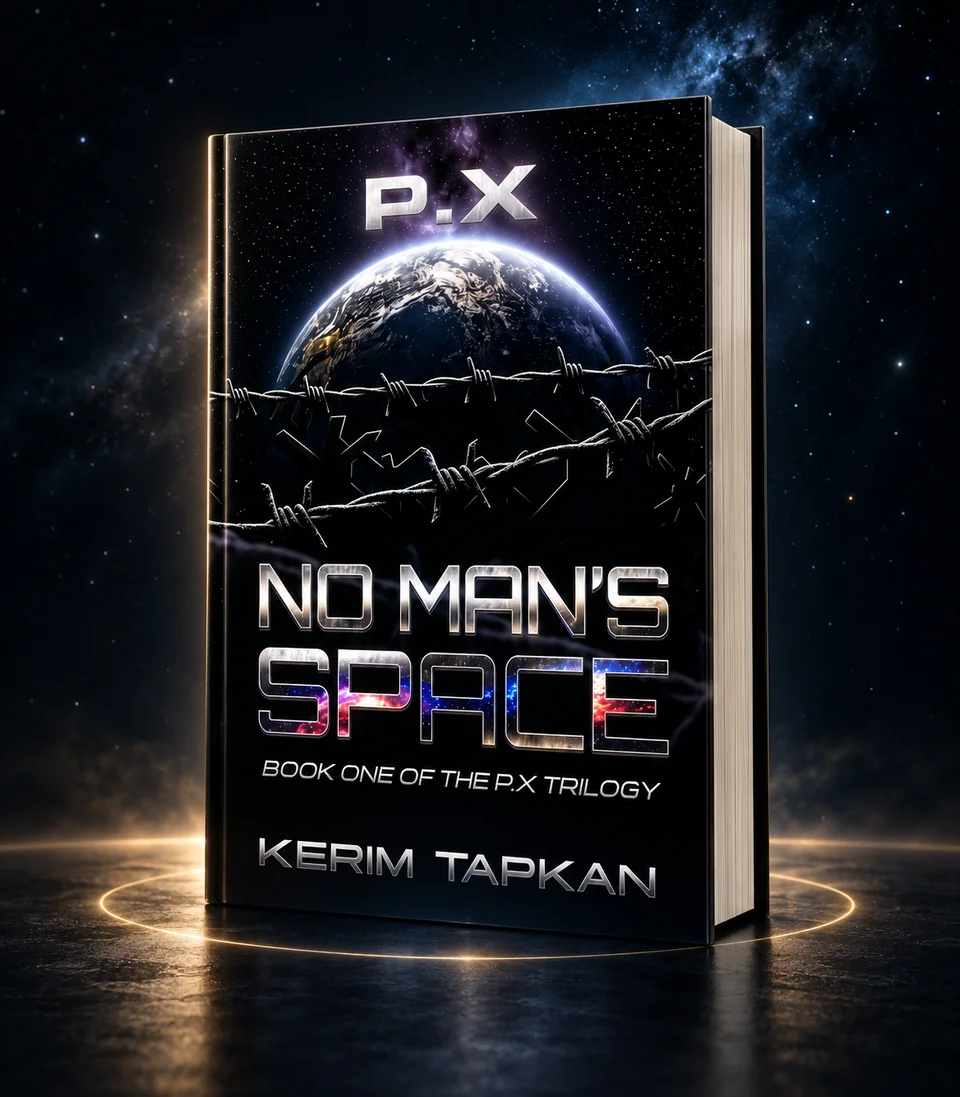
By then, I had seen P.X countless times.
In a Word file. As a PDF. Page by page. On different screens. In multiple versions of the cover design. In print-ready files. I had inspected every chapter, every image, every heading again and again.
But I had never touched it.
No matter how real it looks on a screen, a book file is still an abstract thing. The moment you close the computer, it disappears. You may have written hundreds of pages, but you cannot feel the weight of those pages. You may have designed the cover, but you do not know how it will feel beneath your fingers.
That was why holding the first printed copy of P.X gave me such a strange feeling.
There was nothing in front of me that I had never seen before. Quite the opposite: it was probably one of the things I had looked at more than anything else in my life. I knew every detail of the cover. I had seen every chapter, image, and page layout inside it. I knew what was in the book better than anyone.
And yet it felt as if I were seeing it for the first time.
Because this time it was not behind a screen.
It was in my hands.
I would like to say my first instinct was entirely emotional, but after years of managing projects, the quality-control mechanism in my head started running at exactly the same time.
How had the cover come out?
Were the colors what I wanted?
Was the spine sitting correctly?
How did the text look on paper?
Did the margins feel right?
Did the chapter openings create the effect I intended?
Did the images work in print the way they had on screen?
As I turned the pages, one part of me was an author holding the printed version of his first novel; another part was still looking at the book like a project manager carrying out a pre-delivery inspection.
I suppose that was entirely appropriate for the nature of the P.X journey.
For months I had created something, questioned it, changed it, designed it, and checked it again and again. The appearance of the physical copy did not make that habit disappear instantly.
But after a few minutes, another feeling began to take over.
A Word document has no weight.
A PDF has no thickness.
You cannot turn a page on a screen between your fingers.
Now all those words had a physical counterpart.
For the first time, the page count of P.X was not merely a number. I could feel it as volume and weight in my hands. The sentences I had written over all those months were now printed on paper. The cover I had designed existed on a real surface. The images I had created between sections actually sat between physical pages.
And my name was on the cover.
From the outside, that may sound like an obvious thing. You write a book; naturally your name appears on the cover.
But until that moment, all my life I had seen other people’s names on books.
Now I was holding a science-fiction novel.
And it said Kerim Tapkan on the cover.
At that point, P.X was no longer an idea in my head, a file, or a project folder. It was a book that existed in the real world. The printed copy said something different: this version now existed.
And that realization would make another coincidence, which I will come to next, even more meaningful.
Because one of the first printed copies of P.X would soon travel somewhere very particular.
Not to the place where the novel had been written.
Not to the place where I lived.
To the place where the story itself began.
To Vienna, where Europe’s future was being negotiated in 1815.
To Ballhausplatz.





Discussion
Please mark book spoilers clearly. First-time comments are reviewed before appearing. Your email remains private.
No comments yet. Share your thoughts below.