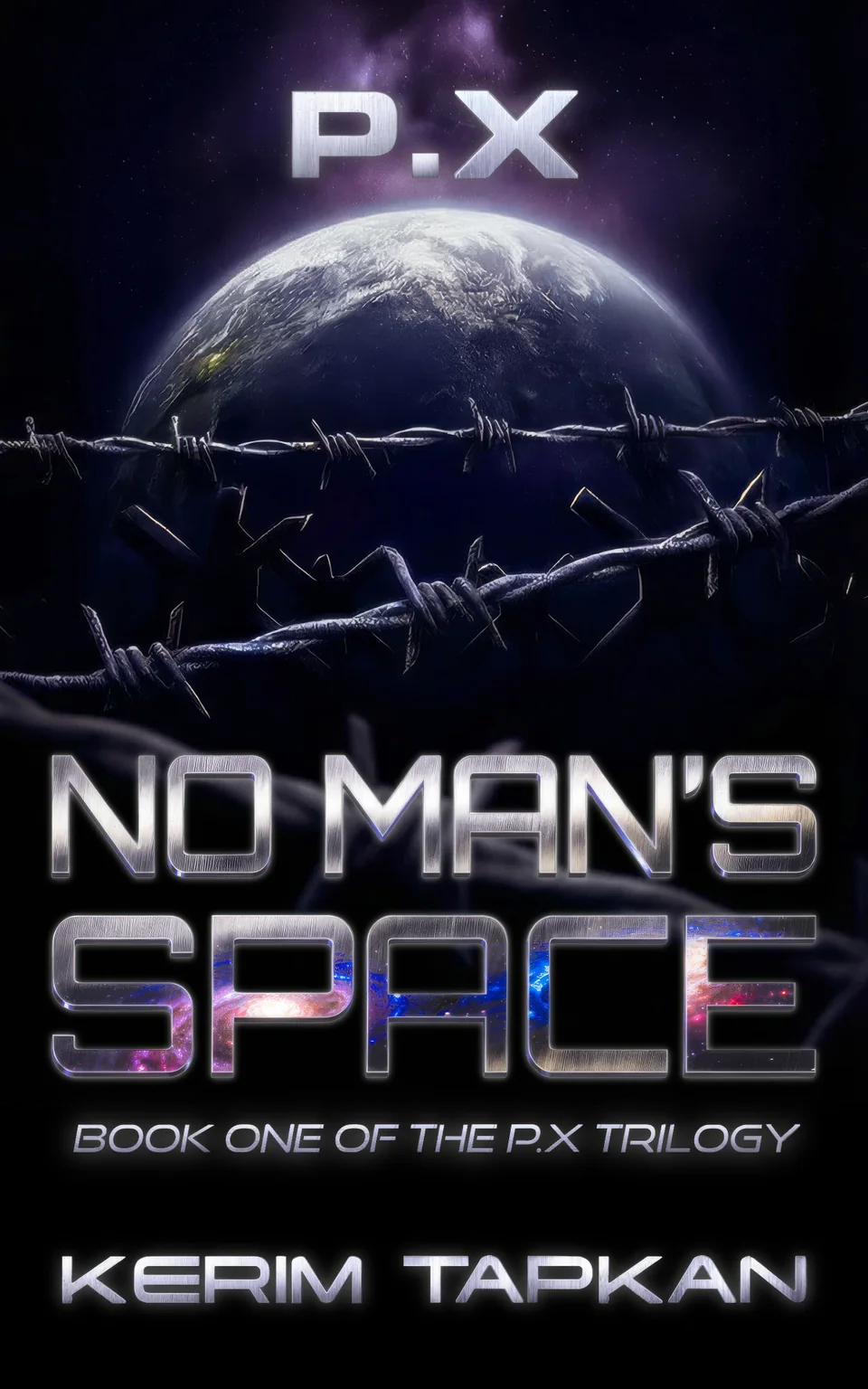





A secret that begins during the Congress of Vienna in 1815 and disappears from view for two centuries resurfaces in the life of Kai Carson. Fascinated since childhood by the stars and by the possibility that humanity is not alone in the universe, Kai sees that lifelong curiosity turn suddenly from speculation into reality when he receives a message from an inexplicable source.
At first, Kai is simply trying to understand what is on the other side of the contact. He soon discovers that the messages are no accident, and that Earth has been observed far more closely than humanity ever imagined. But the truth awaiting him is far larger than the existence of a single civilization beyond Earth.
Long before humanity appeared, numerous civilizations had already formed alliances, fought wars, and established balances of power across the galaxy. Some seek to preserve order and stability; others regard expansion, dominance, and power as their natural right. Earth has remained outside this ancient order, a world that has not yet crossed the technological or political threshold into interstellar life. Precisely for that reason, the direction humanity chooses begins to matter not only to Earth, but to the wider balance of power beyond it.
To one side, Earth is a young civilization that should be protected and allowed to choose its own future. To another, it is a strategic opportunity: a world to be influenced, divided, or brought within a sphere of control before it grows stronger. The possibility that what happens to Earth could become a precedent for how similar worlds are treated in the future makes the planet more important than its inhabitants realize.
As Kai is drawn deeper into this widening picture, first contact becomes something far greater than a personal discovery. While humanity’s representatives struggle to understand the intentions of the powers appearing around Earth, Kai finds himself caught between rival civilizations and forced into a role of mediation and choice for which he was never prepared. The question is no longer simply, “Are we alone?” The real question is what kind of universe humanity is entering now that it knows the answer.
Yet Earth’s importance may not come only from its position in the present.
Traces reaching back to 1815, a legacy carried across generations, and a pattern of unexplained events surrounding Kai suggest that humanity’s connection to galactic history may be far older than first contact itself. Is Earth drawing the attention of greater powers by coincidence, or is there something hidden within humanity’s own past that it has yet to understand? As the story unfolds, every answer Kai receives opens the door to an older question.
P.X: No Man’s Space takes the idea of first contact beyond an encounter with a single alien civilization and places humanity inside an ancient, layered galactic order. Blending historical mystery, ancient civilizations, competing powers, and questions about humanity’s place in the universe, the story stretches from Vienna in 1815 to the threshold of an interstellar future.
As the first volume of the P.X Trilogy, No Man’s Space opens only the first door onto a much larger story. In the books that follow, the universe humanity has only just discovered will continue to widen, while the questions raised by first contact reach toward older histories, greater powers, and the true place of Earth within the story.